
Replacing Your Siding with a Fireproof Stucco System
If you own a home along the Front Range, you already know the exterior takes a beating — hail, high winds, intense UV, freeze-thaw cycles, and an increasingly serious wildfire risk. If your wood, vinyl, or fiber-cement siding is aging, cracking, or simply not built for Colorado's conditions, replacing it with a fire-resistant stucco system is one of the smartest long-term upgrades you can make.
Why "Fireproof" Really Means "Fire-Resistant"
Let's be precise, because it matters. No exterior is truly fireproof. But traditional hard-coat (cement) stucco is one of the most fire-resistant cladding systems available. It's made from Portland cement, sand, and lime — all non-combustible materials. When installed correctly over a proper lath and weather-resistant barrier, a stucco wall assembly can carry a one-hour fire rating, dramatically slowing the spread of flames compared to combustible siding.
For homeowners in wildfire-prone or wildland-urban-interface (WUI) zones across Colorado and Wyoming, that hour can make the difference between a defensible home and a total loss.
Stucco vs. Common Siding Materials
MaterialFire ResistanceDurabilityMaintenance
Excellent (non-combustible)
50+ years
Low
Vinyl siding
Poor (melts/burns)
20–30 years
Low
Wood siding
Poor (combustible)
15–40 years
High
Fiber cement
Good
30–50 years
Moderate
Stucco stands out not just for fire resistance, but for how well it handles Colorado's other threats: it shrugs off UV, resists wind-driven debris better than vinyl, and — when the moisture details are done right — protects the wall system for decades.
The Catch: A Fire-Resistant Wall Is Only as Good as Its Installation
This is where most siding-to-stucco conversions go wrong, and it's the part we care about most.
Stucco's fire resistance and longevity depend entirely on the full wall assembly behind the finish — not just the finish coat you see. A proper system includes:
A weather-resistant barrier behind the lath to manage any moisture that gets in
Galvanized or corrosion-resistant lath properly fastened to the structure
A weep screed at the base with correct ground clearance, so water can drain out instead of wicking up into the wall
Proper flashing at all transitions — windows, doors, decks, roof-to-wall intersections, and especially kickout flashing where a roof edge meets a wall
Correct clearances above grade, roofs, and decking
Control and expansion joints to manage cracking from Colorado's freeze-thaw swings
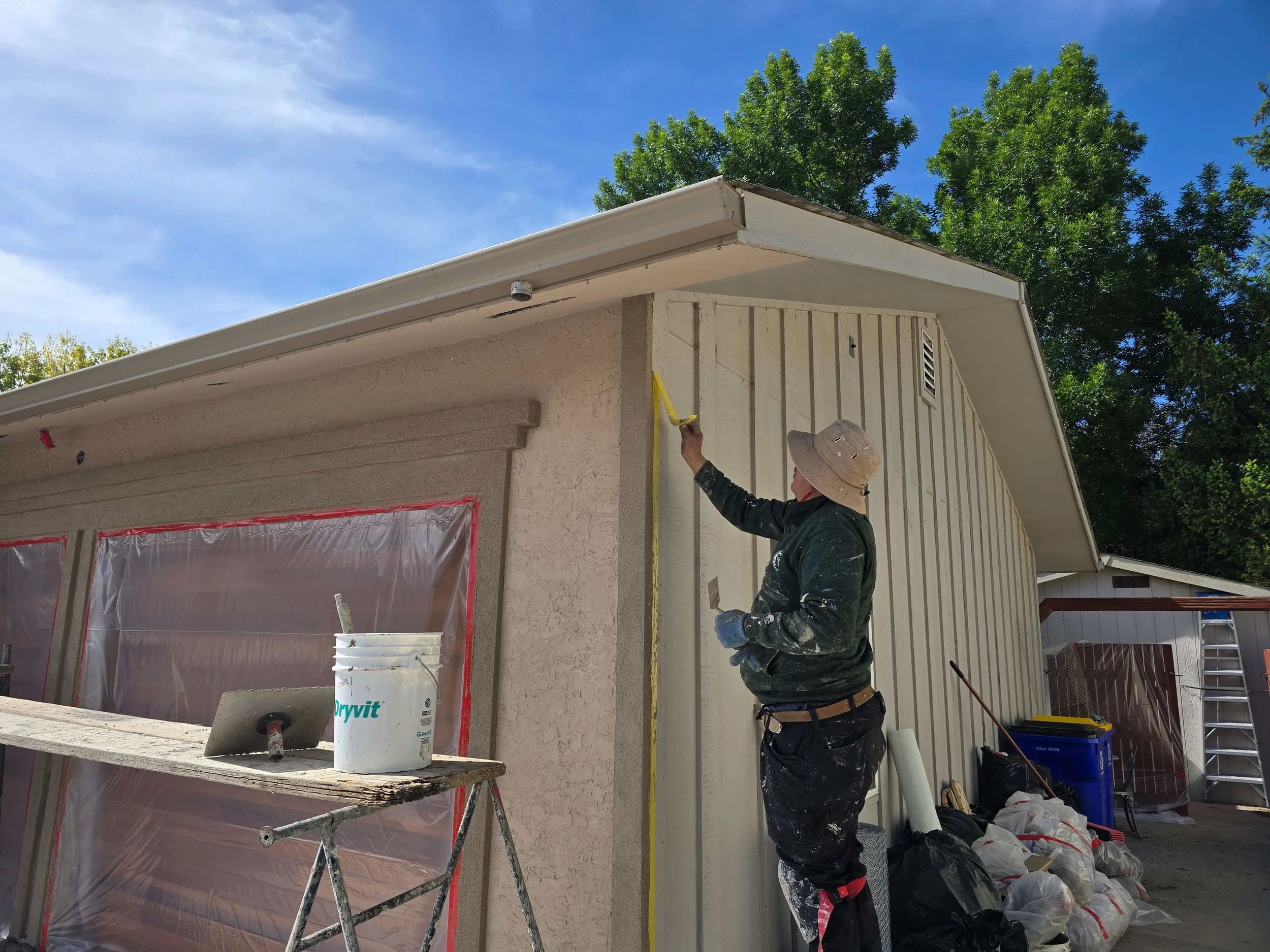
Precision Plastering Siding removal and Stucco installation
Skip any of these and you don't get a fire-resistant, weatherproof upgrade — you get a moisture trap that cracks, stains, and rots from the inside out. Caulk is not a substitute for proper flashing and a weep screed, no matter what a quick-bid contractor tells you.
What the Replacement Process Looks Like
Inspection & assessment — evaluating the existing siding, sheathing condition, and any hidden moisture damage.
Tear-off — removing the old siding down to a sound substrate.
Weather barrier & flashing — installing the WRB and all critical flashing details before anything else.
Lath installation — fastening corrosion-resistant lath as the bonding base.
Scratch & brown coats — building up the cement base layers.
Finish coat & texture — applying the color and texture to match your design (and your neighborhood).
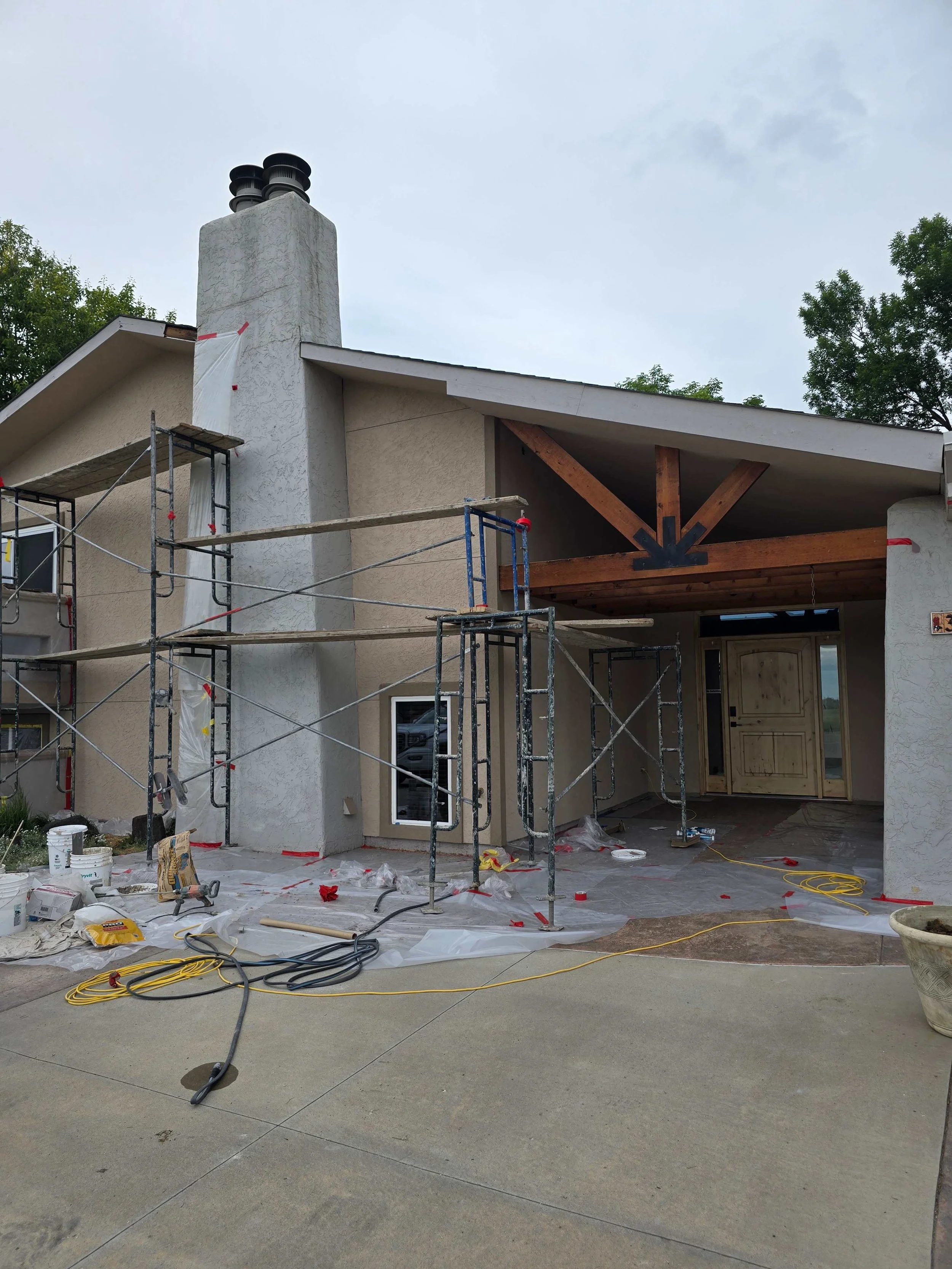
A siding removal project: Precision Plastering siding removal and traditional stucco installers
Done properly, you end up with a seamless, monolithic exterior that's fire-resistant, impact-tough, and built for the climate.
Is Stucco Right for Every Home?
In most Front Range cases, yes — but the substrate, framing, and existing conditions need to be assessed first. Some homes are better served by a stucco system over a properly prepared sheathing; others (especially in high-impact hail zones) may benefit from specific reinforcement details. A real inspection answers this, not a phone estimate.
Frequently Asked Questions
Is stucco actually fireproof? No exterior is fully fireproof, but hard-coat stucco is non-combustible and one of the most fire-resistant claddings available, with assemblies that can achieve a one-hour fire rating.
Can I put stucco directly over my old siding? It's generally not recommended. The best, longest-lasting results come from removing the old siding and installing stucco over a properly prepared substrate with correct barrier and flashing details.
Will stucco crack in Colorado's freeze-thaw climate? All stucco can develop minor cracks over time, but proper expansion/control joints, reinforcement, and quality installation keep them minimal and manageable.
Does stucco help with insurance or wildfire ratings? Fire-resistant cladding can be a factor in WUI building requirements and may help with insurability in fire-prone areas. Always confirm with your specific insurer and local code.
Upgrade to an Exterior Built for Colorado
Replacing tired, combustible siding with a properly installed stucco system gives you a tougher, more fire-resistant, and longer-lasting home — when the details behind the finish are done right.
Precision Plastering has installed and repaired stucco, EIFS, and stone systems across Loveland,Fort Collins, Greeley, Longmont, Boulder, Denver, and Cheyenne since 2009. If you're considering a siding-to-stucco conversion, contact us for a free inspection and estimate.

Call Today! Loveland CO Ft Collins Denver Cheyenne